4 Reasons Your Home Still Feels Unfinished
You’ve decorated, rearranged, and added all the right pieces, so why does something still feel off? The answer is almost always hiding in the details. A few small adjustments to the way a space is put together can shift the whole feeling of a room. Here’s where to look first.
1. Everything sits at the same height
When all your lamps, plants, frames, and decor pieces line up at roughly the same level, the room starts to feel flat, even if every individual item is beautiful. Visual interest comes from variation, and without it, a space can feel more like a store shelf than a real home.
The fix is easy! Look around the room, find the highest point and the lowest. If everything lands in the middle, it’s time to mix things up.
Easy ways to add height variation:
- Bring in a tall plant or an indoor tree
- Stack books under smaller decor pieces to give them a lift
- Play with vase heights (group a tall one with a short one)
- Swap in a taller lamp or lean a large piece of artwork against the wall
That styled, intentional look you’re going for usually comes down to this one thing.

2. Your furniture feels like it’s floating
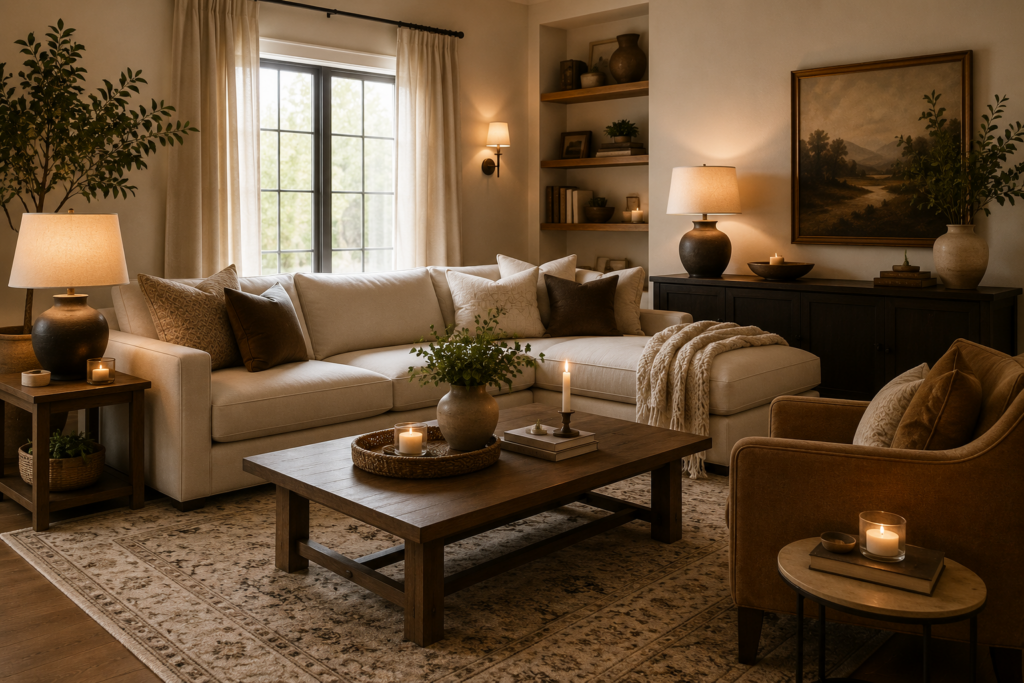
If your sofa and chairs feel disconnected from each other, like they’re just placed in a room rather than arranged in one, there’s a good chance your rug is too small. It’s one of the most common decorating mistakes, and almost everyone has made it at some point.
A rug works like an anchor. When it’s the right size, it pulls all the furniture together into a single, cohesive grouping. When it’s too small, the pieces drift and the whole room feels unresolved.
The general rule:
- In a living room, your rug should be large enough for at least the front legs of every major furniture piece to rest on it
- When in doubt, go bigger. A larger rug makes the room feel more spacious, not smaller
- If you’re shopping, bring measurements and don’t rely on what looks right in the store
It might seem like a small detail, but the right rug can completely transform how a room feels.
3. Your lighting is doing too much heavy lifting
Overhead lighting is practical, but it’s not cozy. If it’s the only source of light in your home, your space may feel a little harsh, especially in the evenings. The rooms that feel the warmest almost always have layered light: a mix of overhead fixtures, floor lamps, table lamps, and softer accent sources working together.
You don’t have to rewire anything. A few small changes to how you use the lighting you already have can make a noticeable difference.
Simple lighting swaps:
- Switch to warm-toned bulbs
- Start turning on lamps in the evening instead of the overhead light
- Put a small lamp on your kitchen counter for softer ambient light
- Add candles or a sconce or two for light that feels warmer
Lighting is often the missing piece people can’t quite name. Once you change it, everything else in the room tends to feel better, too.
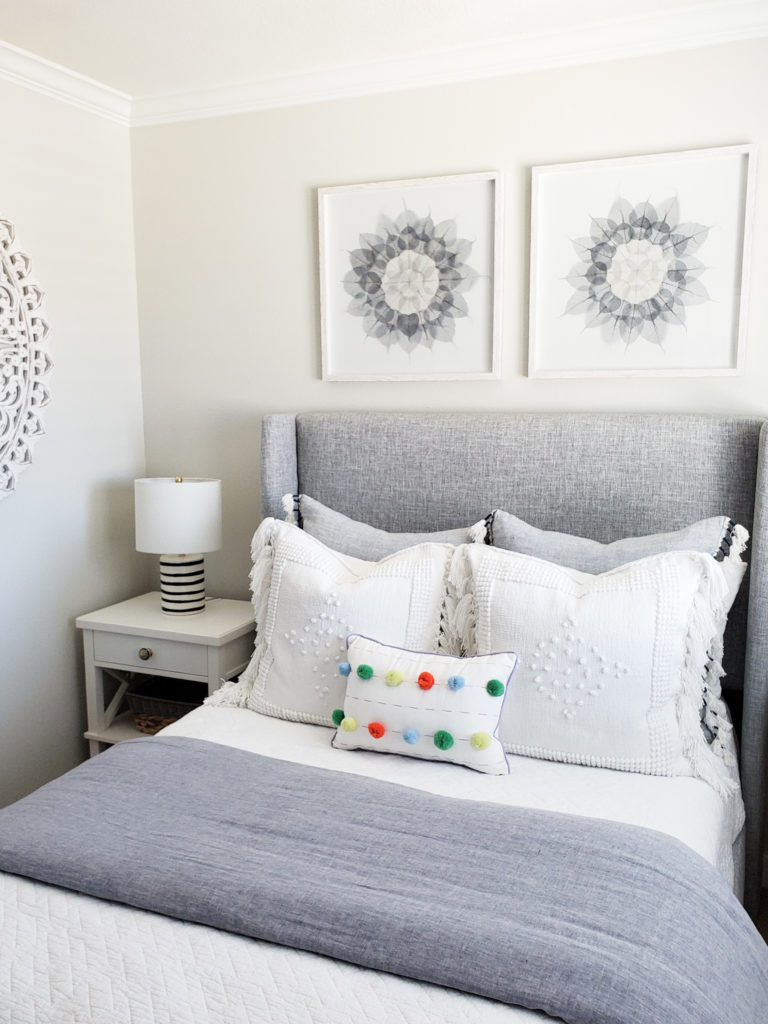
4. Your walls are either too bare or too busy
Wall decor is one of those things that’s easy to get slightly wrong in either direction. Too little and the room feels cold and unfinished, like you just moved in. Too much and it starts to feel cluttered and hard to rest your eyes on anything.
The goal is an intentional arrangement where each piece has enough breathing room to be seen. Even a single well-chosen item, hung at the right height, can do more for a room than a dozen things scattered across the walls.
Getting the balance right:
- Hang art at eye level, the center of a piece should sit around 57–60 inches from the floor
- Group smaller pieces together rather than spreading them out individually
- Leave some walls completely empty, negative space can be part of the design
- If a gallery wall feels chaotic, try pulling it back to three pieces and see how the room breathes
When your walls feel right, the whole room tends to click into place.
A home that feels finished usually comes down to attention, not accumulation. Height, scale, light, and how you use your walls are small details, but they’re the ones that quietly make or break a space. Start with one, and see how much it shifts.