6 Simple Ways to Hang Artwork Like a Designer
Hanging art sounds simple until you’re standing there with a hammer, a measuring tape, and second-guessing every decision. I’ve been there more than once! The good news is that there are a few easy tricks that make wall art feel intentional instead of randomly placed. Whether you’re hanging one large piece, styling art above a sofa, or creating a gallery wall, these simple tips will help your space feel more polished and pulled together.
1. Hang Art at the Perfect Height
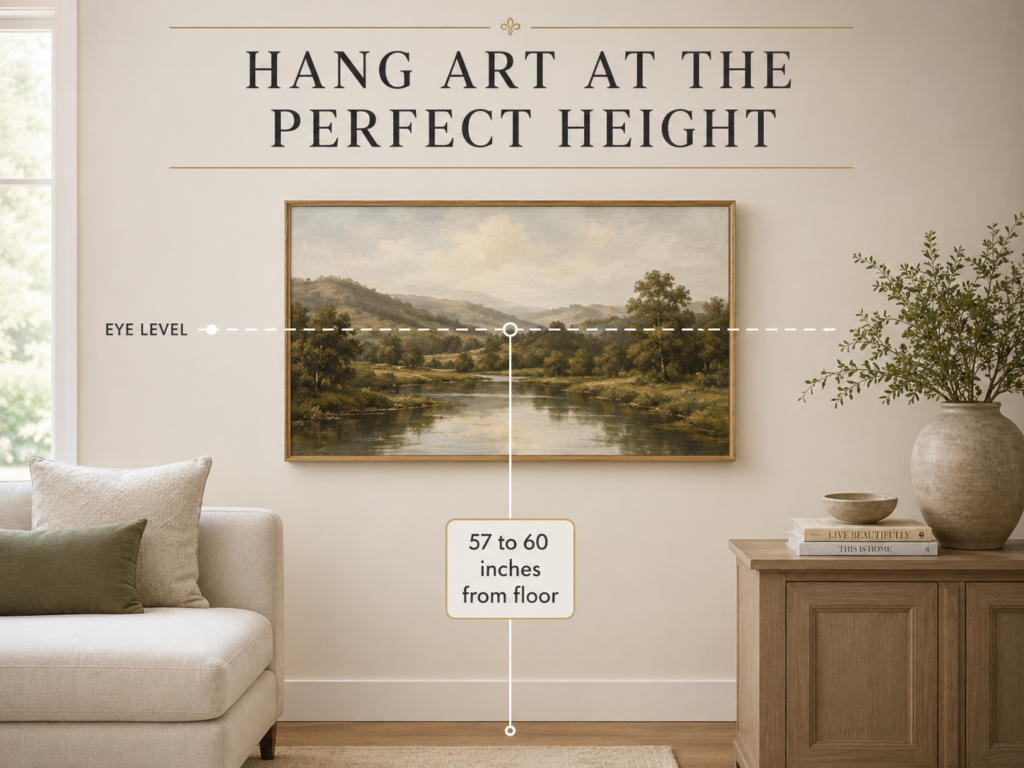
One of the most common mistakes people make is hanging art too high. As a general rule, artwork should be hung at eye level, with the center of the piece around 57 to 60 inches from the floor. This helps the art feel connected to the room instead of floating too far up the wall.
Every room is a little different, but this is a great starting point. If you have tall ceilings, it can be tempting to move everything higher, but resist the urge! Art usually looks best when it relates to the furniture and people in the room, not the ceiling.
2. Keep Art Closer to the Furniture
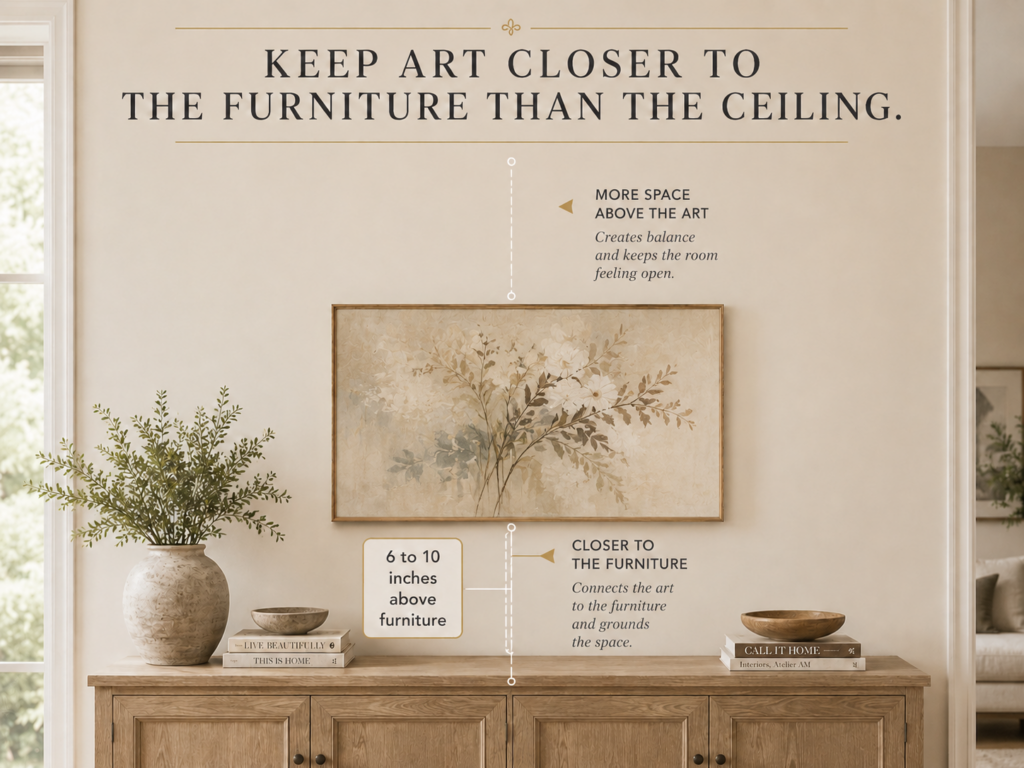
When hanging art above furniture, think of the art and furniture as one styled moment. The artwork should feel connected to the piece below it, whether that’s a sofa, console table, dresser, or bed.
A good rule of thumb is to hang the bottom of the artwork about 6 to 10 inches above the furniture. This keeps the art from looking like it’s floating away and helps everything feel more layered and designer-styled.
If the space between the furniture and ceiling feels large, don’t worry. The goal is not to fill the wall from top to bottom. The goal is to create a balanced arrangement that feels anchored.
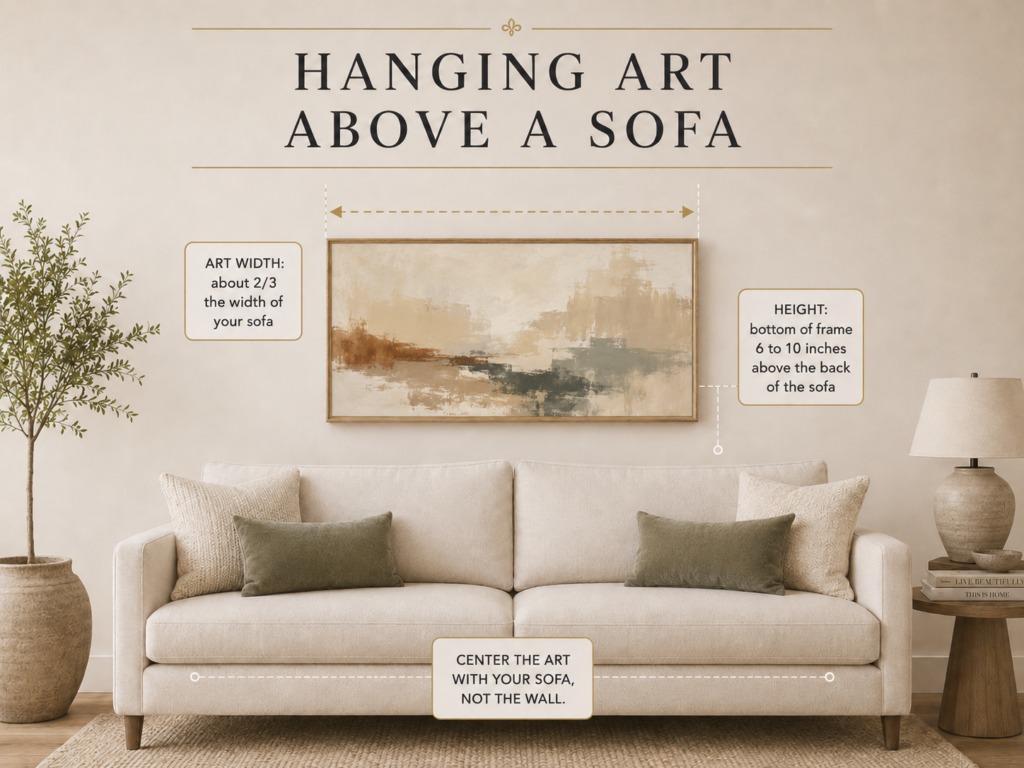
3. Hanging Art Above Sofa
When hanging art above a sofa, the size and placement matter just as much as the art itself. A piece that is too small can make the whole wall feel unfinished, while art that is too high can make the sofa and artwork feel disconnected.
For the best look, choose art that is about two-thirds the width of the sofa. It doesn’t have to be exact, but it should feel substantial enough to hold the wall. Hang it so the bottom of the frame is around 6 to 10 inches above the back of the sofa.
If you’re using two pieces or a set of frames, treat them as one larger piece. Keep the spacing between frames fairly tight so they feel like a collection, not separate pieces floating on the wall.
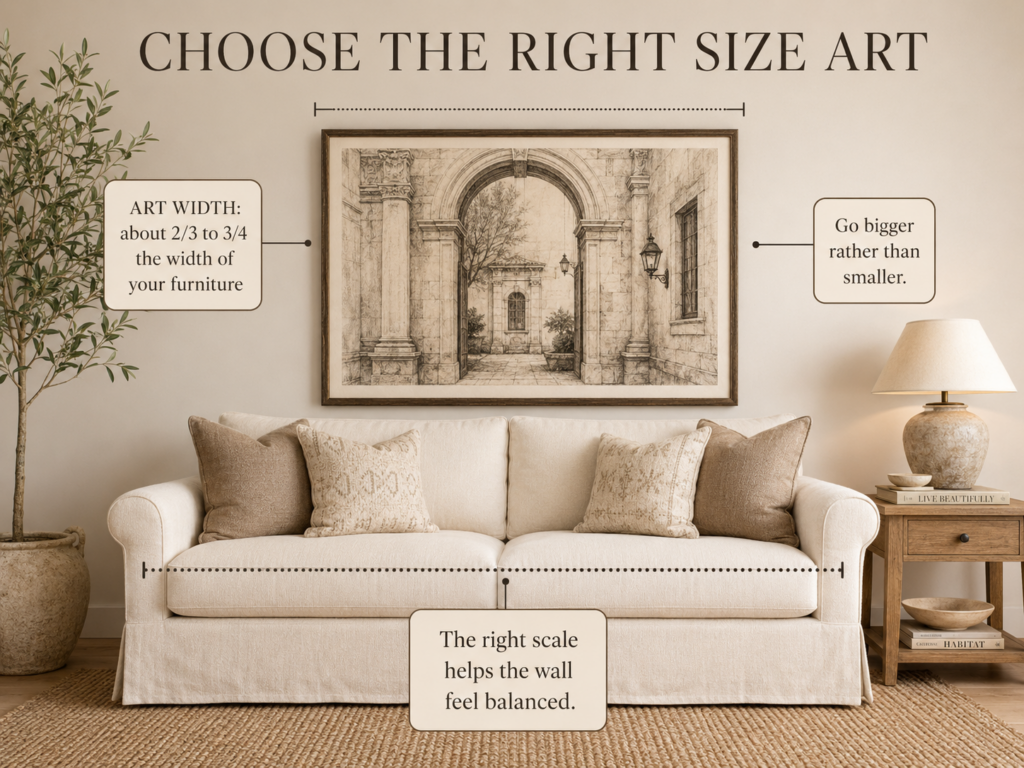
4. Choosing the Right Size Art
Scale is one of the biggest things that makes art look designer-styled. In most cases, bigger is better! Small art on a large wall can feel a little lost, especially above furniture.
A good rule is to choose art that is about two-thirds to three-fourths the width of the furniture below it. For example, if you’re hanging art above a console table, dresser, bed, or sofa, the artwork should be wide enough to feel balanced with that furniture piece.
If you already have a smaller piece you love, you can make it feel larger by using a bigger frame, adding a mat, or pairing it with other pieces to create a gallery wall.
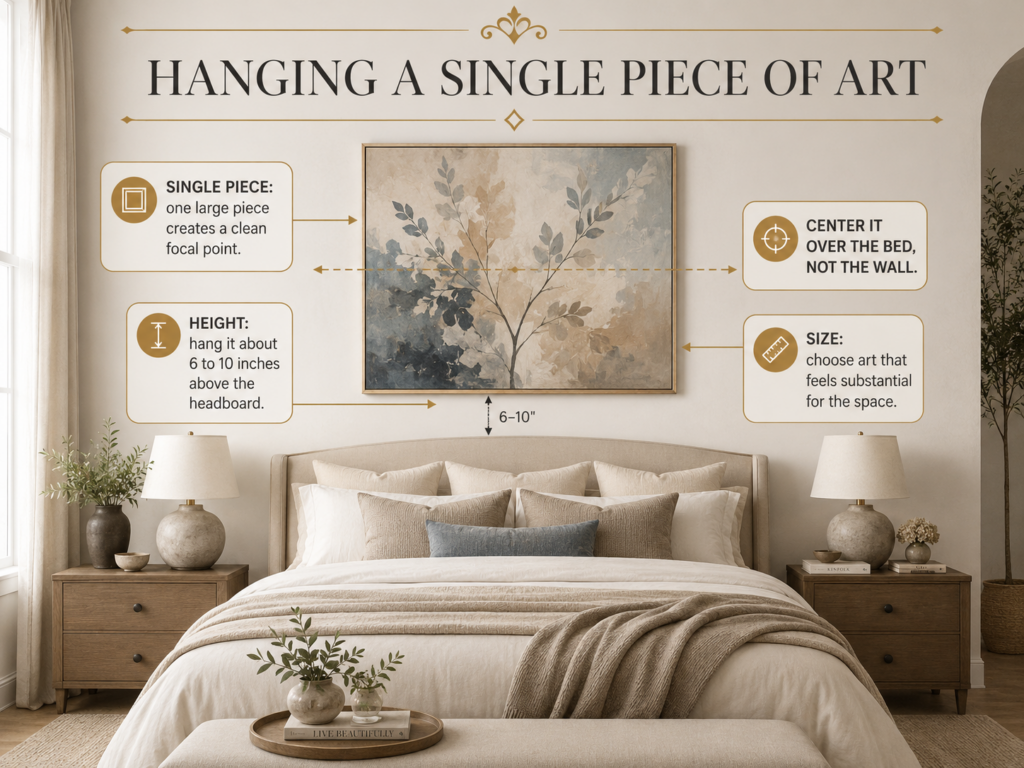
5. Hanging a Single Piece of Art
A single large piece of art is one of the easiest ways to make a space feel clean, elevated, and intentional. This works especially well above a sofa, bed, fireplace, console table, or dresser.
When hanging one piece, make sure it is large enough for the space. Center it over the furniture below, not necessarily the entire wall. This is especially important if the furniture is not perfectly centered in the room.
Keep the placement simple. Hang the piece at eye level or 6 to 10 inches above the furniture, and let it be the focal point.
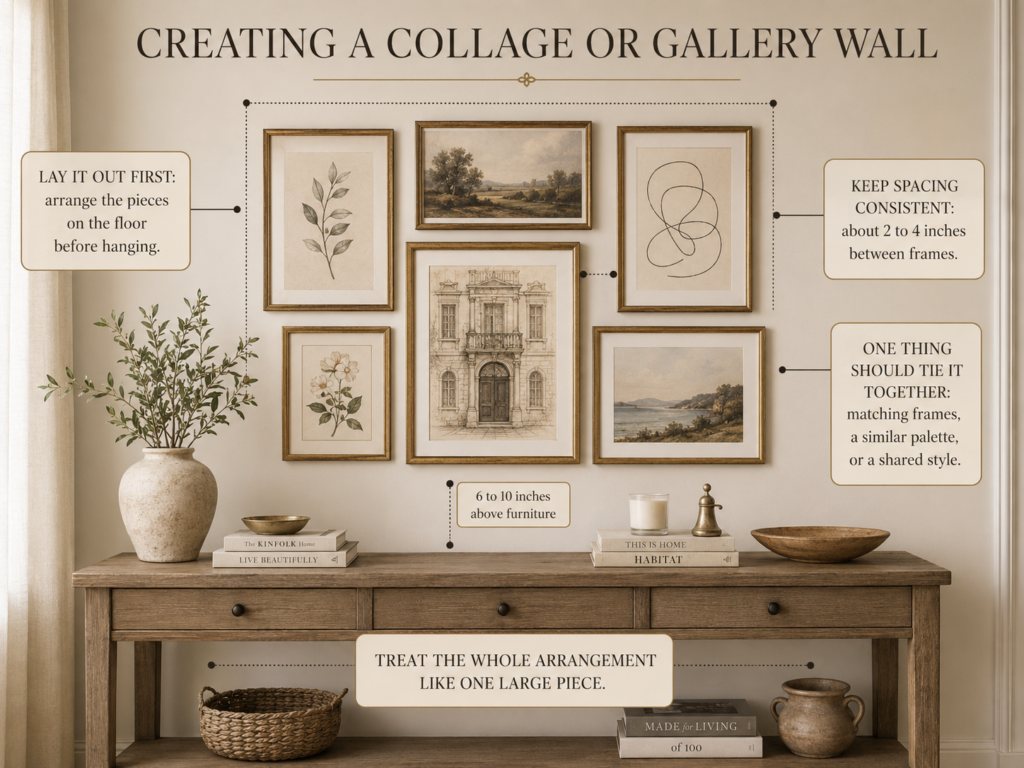
6. Creating a Collage or Gallery Wall
A gallery wall is a great way to fill a larger space, display family photos, or mix different art pieces together. The key is to make the collection feel intentional.
Start by laying everything out on the floor first. This lets you play with the arrangement before putting holes in the wall. I like to trace the frames on paper, cut them out, mark where the hanger is on each one, then tape them to the wall in the order I’ve laid them out on the floor. It’s easier to visualize the spacing and to put the nail in the right place. Keep the spacing between frames consistent, usually around 2 to 4 inches apart.
For a more polished look, choose one thing that ties the gallery wall together. That could be matching frames, a similar color palette, black and white photos, or artwork with a similar style. The pieces don’t all have to match perfectly, but they should feel like they belong together.
Hanging art does not have to be complicated, but the right placement makes such a difference. A few simple measurements can take a wall from feeling unfinished to beautifully styled. Once you know the basic designer rules, it becomes so much easier to hang art with confidence and create a space that feels pulled together.